
Walking & Working Surfaces
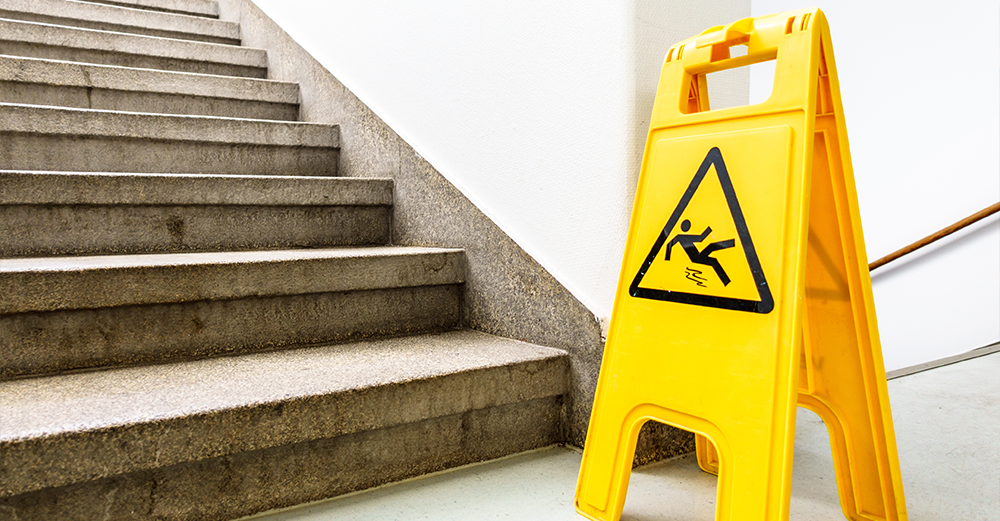
Falls are a leading cause of jobsite injuries – especially as conditions change. Developing a slip, trip, and fall protection plan and providing training are key to helping keep employees safe.
Questions to Ask
- Are the floors clean and dry?
- Are permanent aisles and passageways properly marked and kept clear?
- Are load-limit weights posted on mezzanine storage areas?
- Is adequate light provided in work areas and at the job site?
- Is there a clear and marked path to the nearest emergency exit?
- Are the "prep" stations kept clean and free of trip hazards?
- Are hatchway and floor openings properly guarded?
- Are fixed industrial stairways at least 22 inches wide and provided with proper railings?
Controlling Hazards
- Guard every floor hole or opening which a worker can accidentally walk into.
- Provide a guardrail, mid-rail, and toe-board around every elevated open-sided platform, floor, or runway.
- Limit and control the access zones in the job site that have recognized fall hazards.
- Confirm "Hard Hat Required" signage is placed below any open areas to limit injury from falling objects.
- Use caution tape, signs, barriers, or personnel.
Sources:
National Safety Council. Falls Account for 17% of Workplace Deaths. https://www.nsc.org/workplace/safety-topics/slips-trips-and-falls/slips-trips-and-falls-home?srsltid=AfmBOoq49MTysNxR3ZTZNcBKK3DiAIRVss9-mBXnAzXmpMzWvy2nyeiV. Accessed April 27, 2026.
Occupational Safety and Health Administration. Slips Trips & Falls. https://www.osha.gov/sites/default/files/2018-12/fy16_sh-29672-sh6_SlipsTripsFallsHandoutforSafetyCommitteeMeetings.pdf. Accessed May 6, 2026.
Portions of this Risk Management Alert were provided by Zywave: Slip and Fall Hazards.
5-R-1373